I’ve been to a lot of music festivals over the years, and honestly, they’re not all worth the trip. Some are great, you have a good time, and then you go home and forget about them.
And then there are the ones where you walk through the gates and think, Okay, this is different.
I’ve seen massive stages, crowds of hundreds of thousands, people dancing until sunrise, cities built in the middle of the desert, and festival grounds that look completely different once the sun goes down.
Those are the festivals you remember.
So if you’re looking for something that’s more than just a bunch of bands playing on different stages, these five are worth checking out:
- Shambhala
- Coachella
- Tomorrowland
- Glastonbury
- Burning Man
Here’s what makes each of them different.
1. Shambhala — British Columbia, Canada
Shambhala Music Festival started back in 1998 at Salmo River Ranch with only about 500 people. It was basically a small electronic music gathering that grew over the years, mostly through word of mouth.
Now, around 23,500 guests, artists, and crew come to the festival.
But honestly, the location is one of the coolest things about Shambhala.
The festival takes place on a 500-acre working farm, and some of the stages are permanent structures. They don’t just build everything for the festival and tear it down a few days later. The stages stay there and change over time.
And when the festival is over, it’s still a working farm. There are cows, horses, pigs, chickens, and even miniature donkeys.
So you can spend the weekend dancing to electronic music and then, a few days later, the same place is just… a farm again.
That’s pretty unusual.
2. Coachella — California, USA
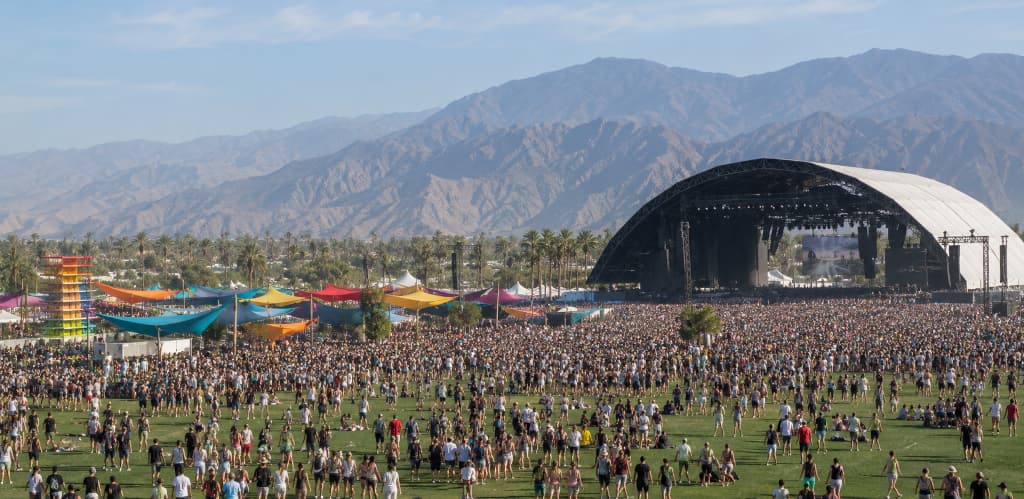
Coachella is probably the first festival that comes to mind when people think about the big American festival experience.
You’ve got the music, the desert heat, the fashion, the celebrities, the art installations, and, of course, people taking approximately 14,000 pictures of themselves.
The Coachella Valley Music and Arts Festival started in 1999 at the Empire Polo Club in Indio, California. The first festival had Beck, Tool, Rage Against the Machine, The Chemical Brothers, Morrissey, Underworld, Jurassic 5, and a bunch of other acts.
About 17,000 tickets were sold for the first day and 20,000 for the second.
And Coachella wasn’t originally the giant pop-culture machine it is today. It was more focused on interesting artists and alternative acts that didn’t necessarily fit into the biggest mainstream festivals.
That obviously changed.
Today, you can see pop, hip-hop, R&B, rock, electronic, indie, and pretty much everything else. And even if you don’t care about the celebrity side of Coachella, there’s still something pretty impressive about seeing that many people packed into the desert for music.
3. Tomorrowland — Belgium
Tomorrowland started in 2005 in Boom, Belgium, and it got big very, very fast.
By 2026, 400,000 people from more than 200 countries came to the festival.
But the thing that really separates Tomorrowland from a lot of other electronic festivals is the production.
They don’t just put up a huge stage and call it a day.
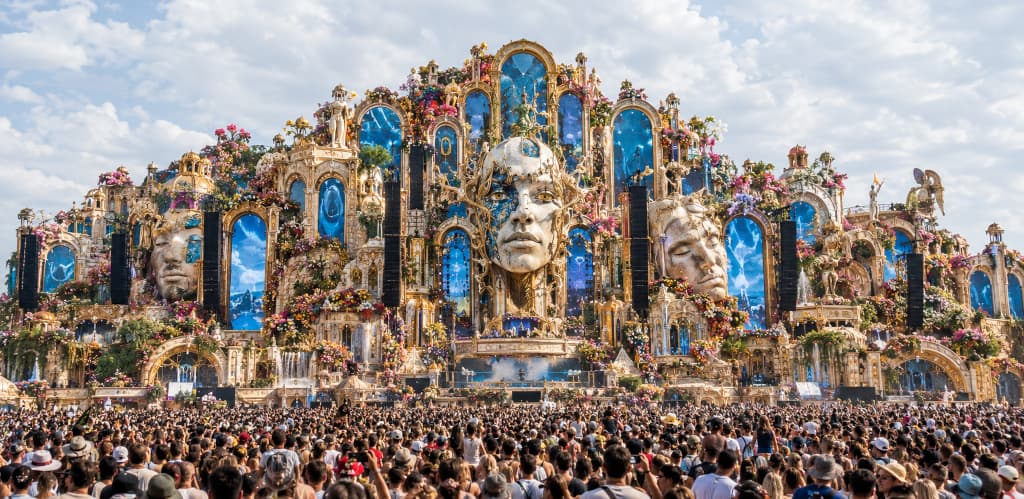
They basically build an entire fantasy world around the festival. One year the main stage might look like a giant castle. Another year it can look like some enormous machine, a fantasy landscape, or something that looks like it came straight out of a movie.
And then you have the music: house, techno, trance, hardstyle, and pretty much every major corner of EDM, with some of the biggest names in electronic music on the lineup.
I also like that the theme actually matters. It changes from year to year and becomes part of the whole festival.
In 2026, the theme was Consciencia, built around six emotions: Wonder, Love, Anger, Joy, Desire, and Sadness.
So yeah, Tomorrowland is not exactly a low-key weekend in the woods.
4. Glastonbury — England
Glastonbury is different from the others because it has something you can’t really manufacture: history.
It started at Worthy Farm in Somerset in 1970 with around 1,500 people. A ticket cost £1, and you even got free milk from the farm.
Yeah, things have changed a little since then.
Today, more than 200,000 people come to Glastonbury, and the festival has become one of the biggest music and arts events anywhere.
The music is all over the place, too. You can go from rock to electronic, pop, folk, hip-hop, or jazz, and then somehow end up watching a circus or comedy show.
And then there’s the mud.
If it rains, the place can get absolutely destroyed. People put on their boots, accept that their shoes are never going to be the same again, and keep going.
At this point, the mud is basically part of the festival.
That’s Glastonbury. Huge, messy, old-school, and unlike pretty much anything else.
5. Burning Man — Nevada, USA
Okay, I know Burning Man isn’t technically a music festival.
But come on. I’m putting it on the list anyway.
Burning Man started in 1986, when Larry Harvey and Jerry James built a wooden human figure and burned it on San Francisco’s Baker Beach. About 35 people were there for the first burn.
Fast-forward to today, and you’ve got Black Rock City, a temporary city built in the middle of Nevada’s Black Rock Desert.
In 2023, around 74,000 people took part.
And this is where Burning Man gets really different.
There aren’t traditional concert stages with a normal lineup of headliners. Instead, the people who come there build the experience themselves.
You get massive interactive art installations, theme camps, costumes, performances, giant sound systems, and completely ridiculous vehicles driving around the desert.
You’re not really going to Burning Man just to watch other people perform.
You’re going there and becoming part of the thing yourself.
And honestly, that’s probably why people who go once often end up going back.